ASC's Intersections Newsletter — March 13, 2026
🎧 Listen to this article
Nora's Note
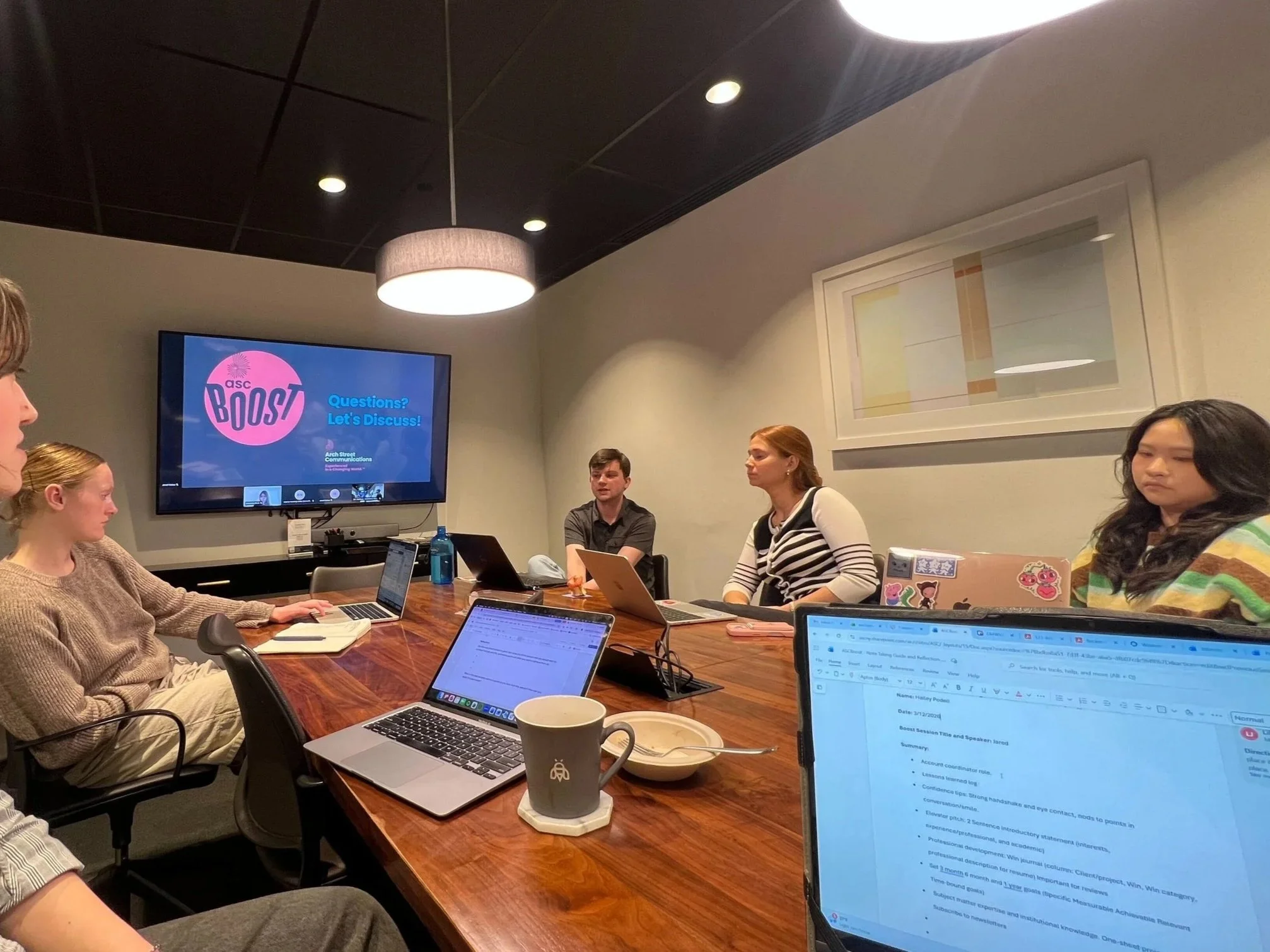
ASCBoost: Learning, Leading, and Launching Careers. Investing in the next generation of communications professionals is part of our culture. Through our intern program, ASCBoost, ASC staff share practical insights to help interns build real-world skills and confidence for their next steps. This winter, Suzanna Lloyd and Lilly Johnsen kicked off the series with a session on building strong early-career foundations—covering networking strategies, LinkedIn best practices, and how to turn internship experience into standout resumes and portfolios. Jared Klukasended the season with a talk on building confidence in the workplace. As the winter cohort begins to wrap up, we’re starting to hear capstone presentations where interns showcase the projects they’ve developed during their time with us. It’s a highlight for everyone at ASC—and a chance to celebrate the creativity, insight, and hard work each intern brings to the firm.
Transportation
New York City community boards are not waiting for Albany or City Hall to make streets safer—they're pushing the Mamdani administration's Department of Transportation to act on Sammy's Law, a 2024 state law enabling the city to lower speed limits. Boards across Manhattan, Queens, and Brooklyn have passed resolutions urging DOT to designate their districts as 20 mph slow zones, named in memory of 12-year-old Sammy Cohen Eckstein, who was killed by a driver in 2013. Read more about the grassroots momentum—and the political back-and-forth that's been slowing implementation down. (Source: Streets Blog)
Mass Transit: MDOT MTA aims to improve on-time performance by empowering bus operators with real-time information
Gothamist: City plans bike lanes and bigger plazas for Manhattan’s 14th Street busway
AMNY: Appeals court to rule on whether Gateway Tunnel funding can remain temporarily unfrozen
Climate
What if cows—one of agriculture's biggest climate culprits due to their outsized methane footprint—could also be part of the solution? A new Swiss study found that when dairy cows consumed a diet containing just 1% biochar (a charcoal-like substance made from burned organic matter), between 70–90% of it survived digestion intact. This means cattle could naturally spread this innovative, carbon-stabilizing material across farmland through their manure. Read more to learn how this approach could help offset livestock's climate footprint by turning manure into a vehicle for long-term carbon storage in soil. (Source: Anthropocene Magazine)
Grist: The future of geothermal energy may depend on fossil fuel workers
Inside Climate News: Texas Seizes the solar crown from California, and other key points from the latest electricity data
Canary Media: Metal powders help fuel rockets. Now they could heat up factories, too.
Economic Development
Developer LCOR's Coney Island project is proof that geothermal works in dense cities. To offset the higher upfront costs, LCOR relied on a stack of public and private incentives, including state grants, utility programs, and a federal tax credit. While installation is more expensive than conventional systems, long-term lifecycle costs are significantly lower, with minimal maintenance required once the system is in place. Read more to learn how drilling innovation could simplify retrofitting. (Source: Smart Cities Dive)
Bronx Times: Mayor Zohran Mamdani highlights Highbridge Gardens shed removal as city advances new scaffold rules
New York YIMBY: NYCHA announces completion of more than 800 renovation projects totaling over $5.1 billion
Multi Housing News: Brooklyn affordable housing portfolio changes hands for $80M
Digital
Digital tools are beginning to reshape how recycling facilities operate. One of the most promising developments is the use of digital twins, virtual models that replicate the performance of real-world recycling plants. By simulating operations and monitoring equipment in real time, these systems help operators identify bottlenecks, anticipate maintenance needs, and test improvements before making costly changes on the ground. Companies like Veolia and PureCycle are already exploring how digital twins can connect engineering, operations, and maintenance data into a single system. The result is clearer decision-making, more efficient facilities, and a practical path toward modernizing recycling infrastructure. Read more about the rise of digital twins to boost efficiency here. (Source: Waste 360)
GovTech: Study: States passed 99 cybersecurity-related bills in 2025
Route Fifty: New York counties to roll out AI assessment tool
MIT News: Enhancing maritime cybersecurity with technology and policy
About Arch Street Communications
At ASC, we help government agencies, corporations and nonprofit organizations across the globe communicate issues that affect people’s lives. We’re the bold, nimble, women-owned small business (WBE) that has supported strategic communications programs to build stronger communities for 30 years.
Ready to find the “simple truth” solutions to build a better future? We want to hear from you! Get in touch to learn how our signature approach can work for you.
Subscribe to Arch Street Communications' Newsletter Intersections